Names名称
40
Descriptions描述
40
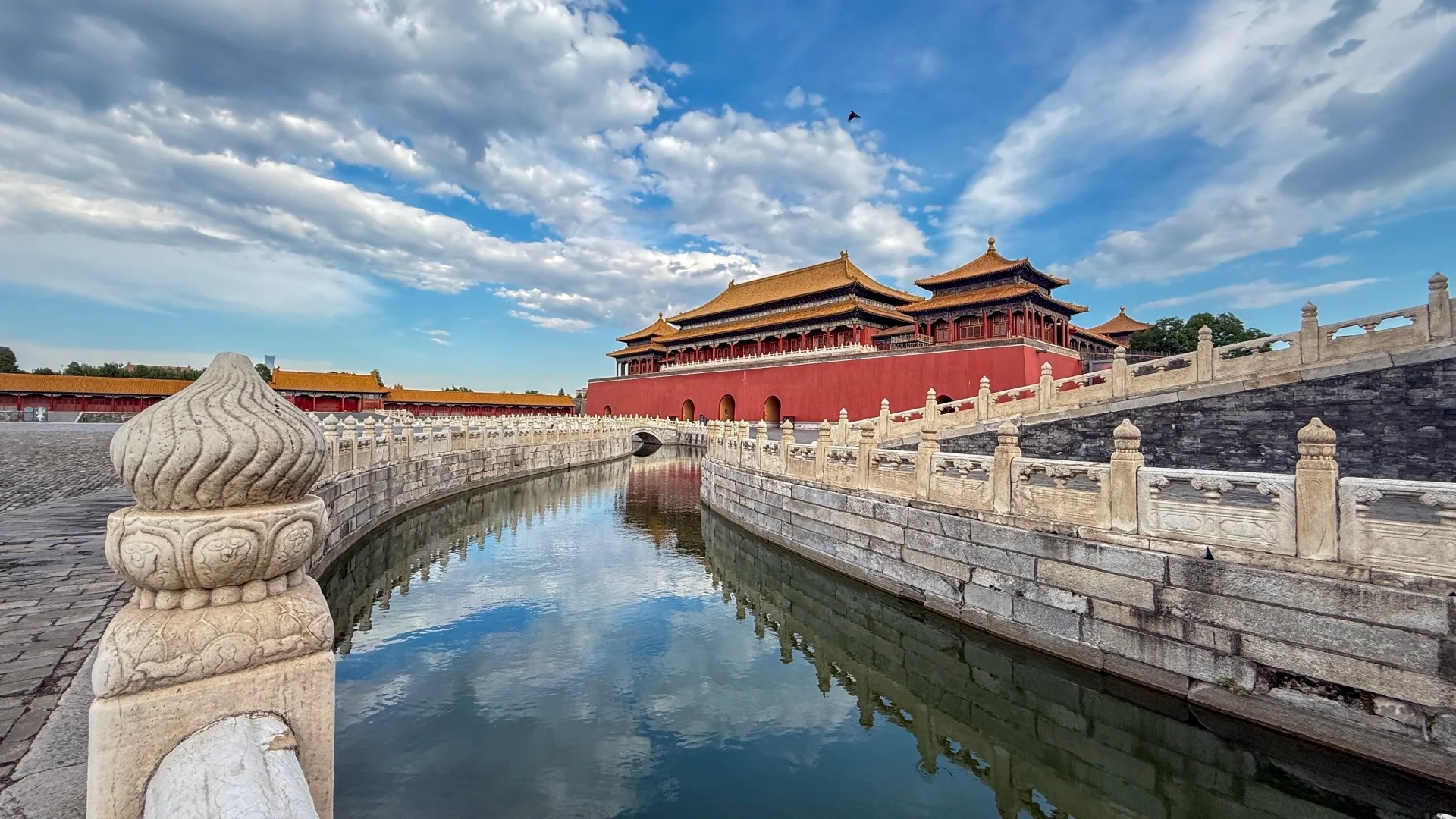
The Forbidden City is located in the center of Beijing and is the largest and most famous palace complex in China. It was built in the early 15th century (during the Ming dynasty) and served as the main residence of the emperors of the Ming and Qing dynasties for more than 500 years. Today it is the Palace Museum, which houses collections of imperial artworks, clothing, porcelain, bronze objects, and documents.
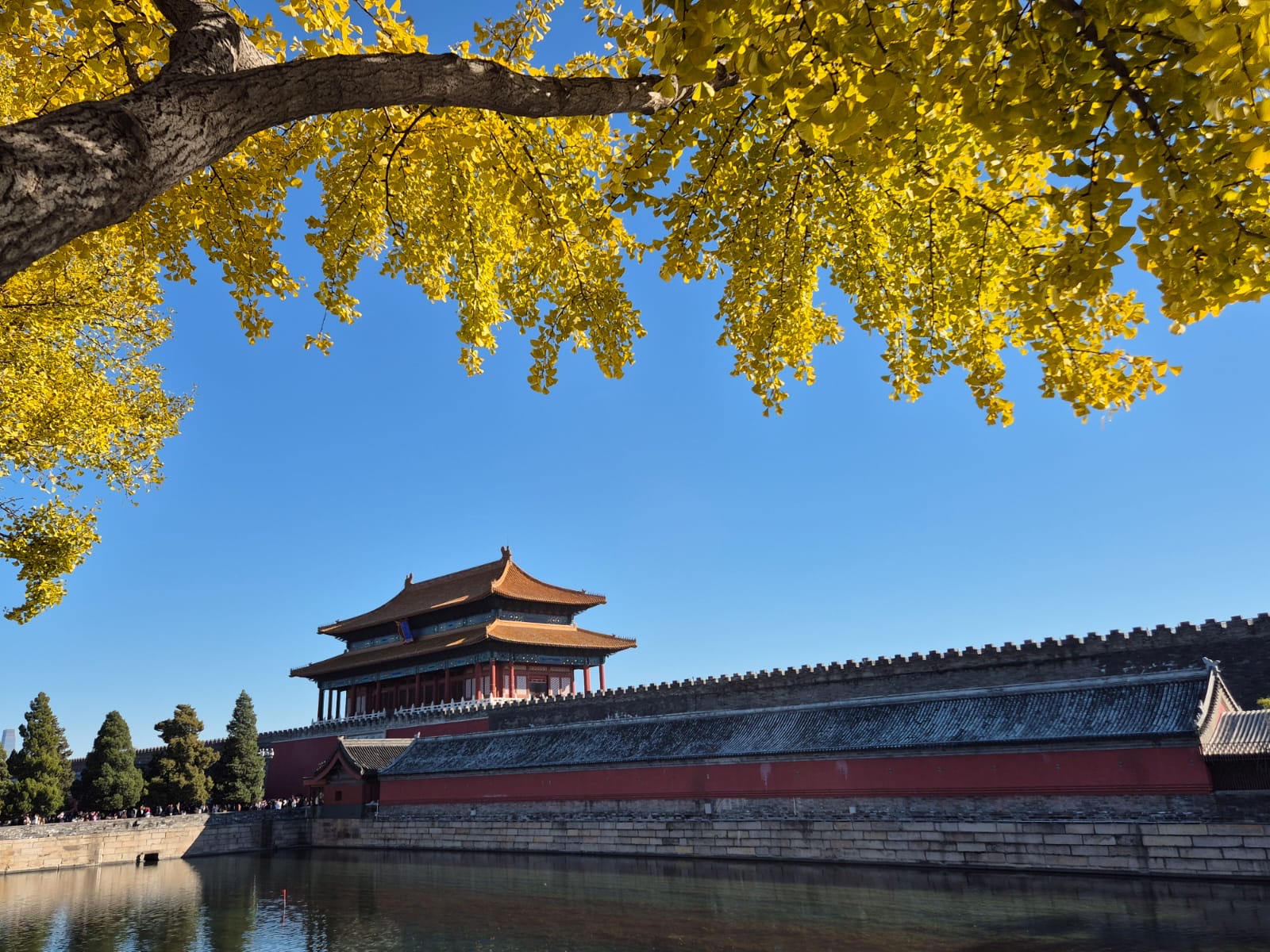
The most intricate wooden structure atop the palace walls.紫禁城城墙上最精巧的木结构建筑。
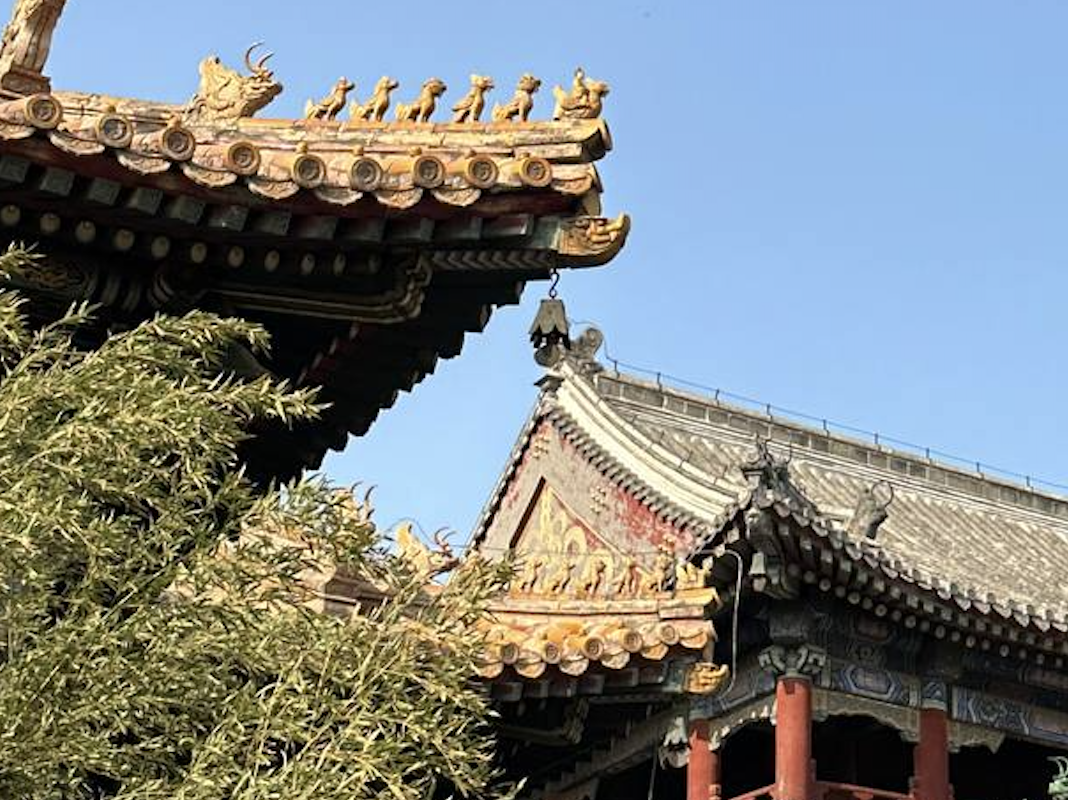
The highest rank of palace architecture.紫禁城内等级最高的宫殿。
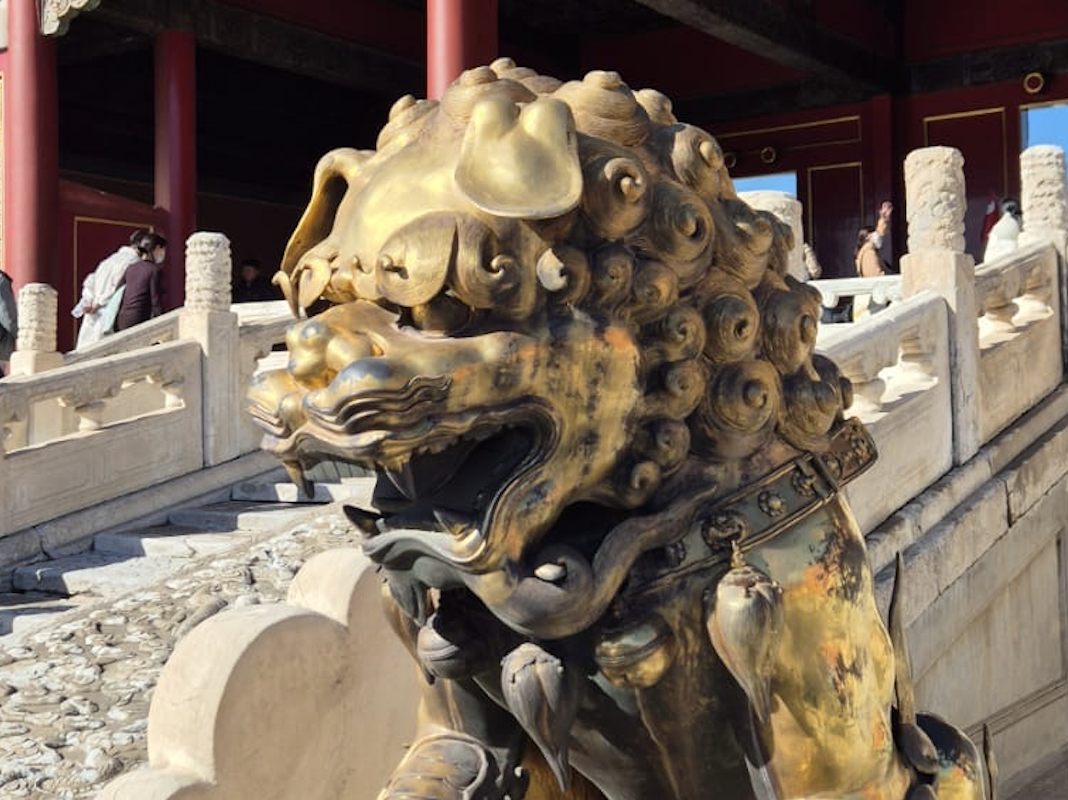
Yellow glazed tiles reserved for imperial use.黃色琉璃瓦为皇家专属。
A tranquil garden at the northern tip of the palace.紫禁城最北端的幽静宫苑。
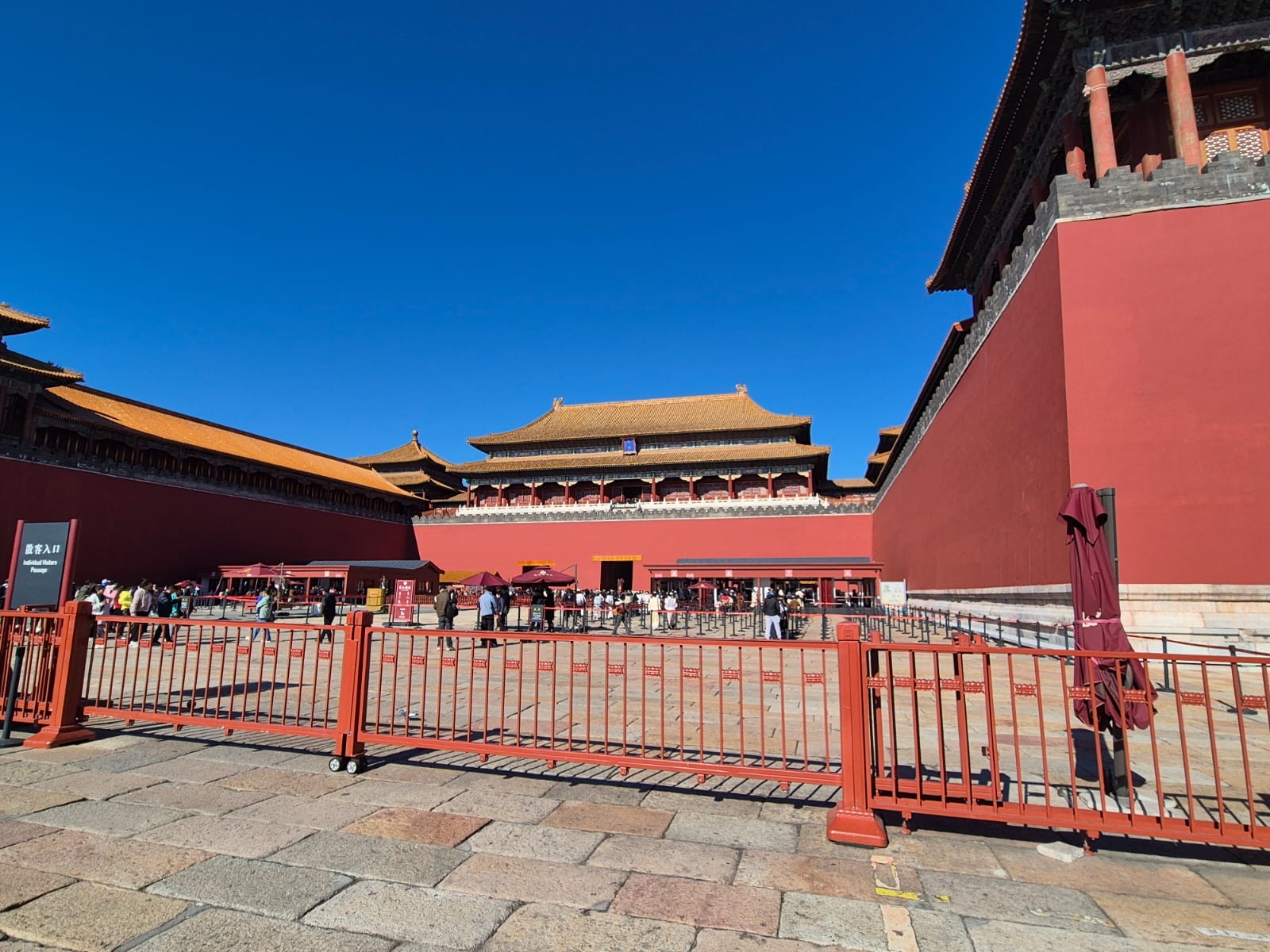
The grand southern entrance.紫禁城南端的庄严入口。
Ming & Qing emperors' residence.明清帝王正寝。
The working residence of Qing emperors.清代帝王处理政务。
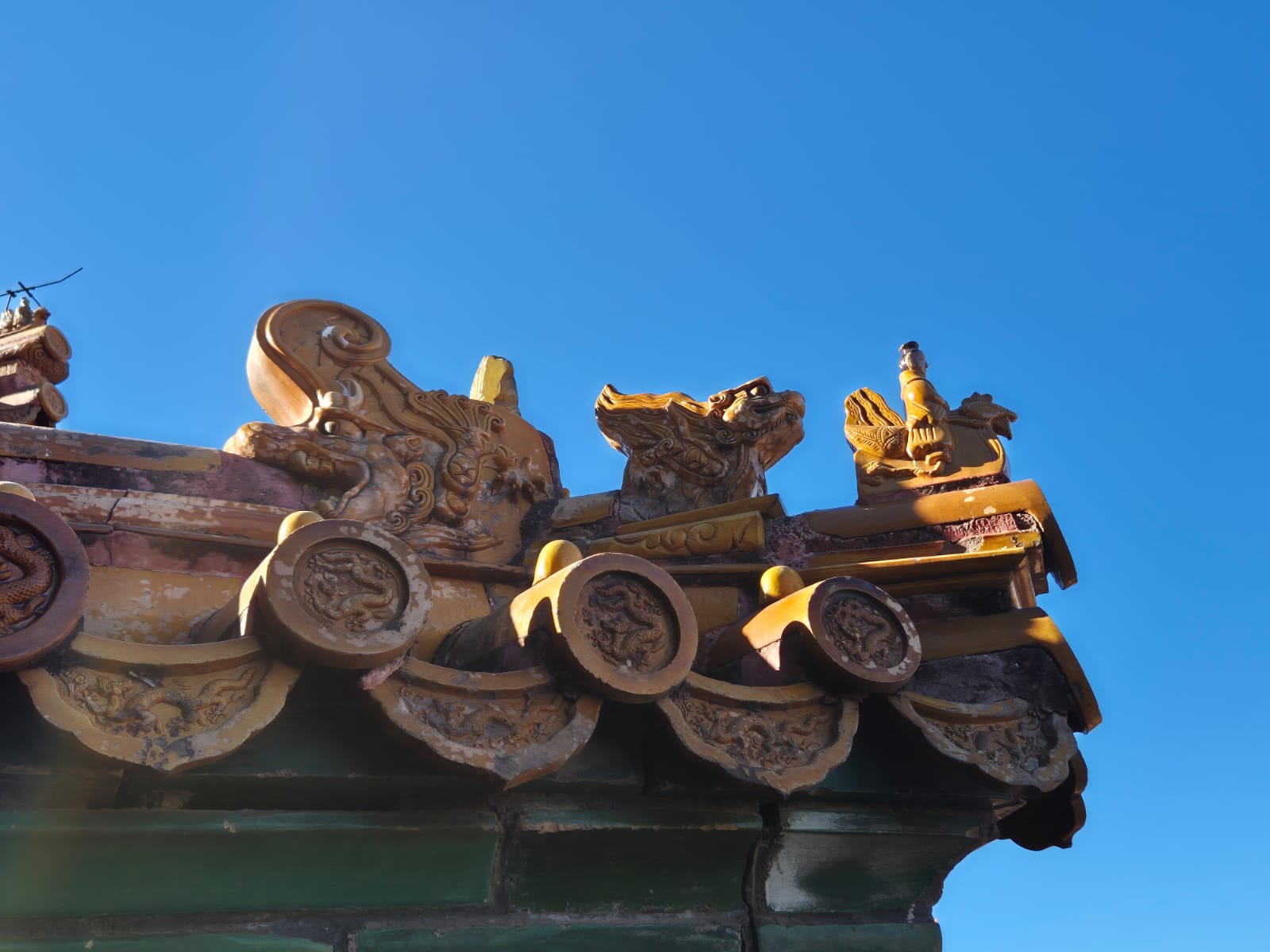
The northern exit facing Jingshan.紫禁城北门。
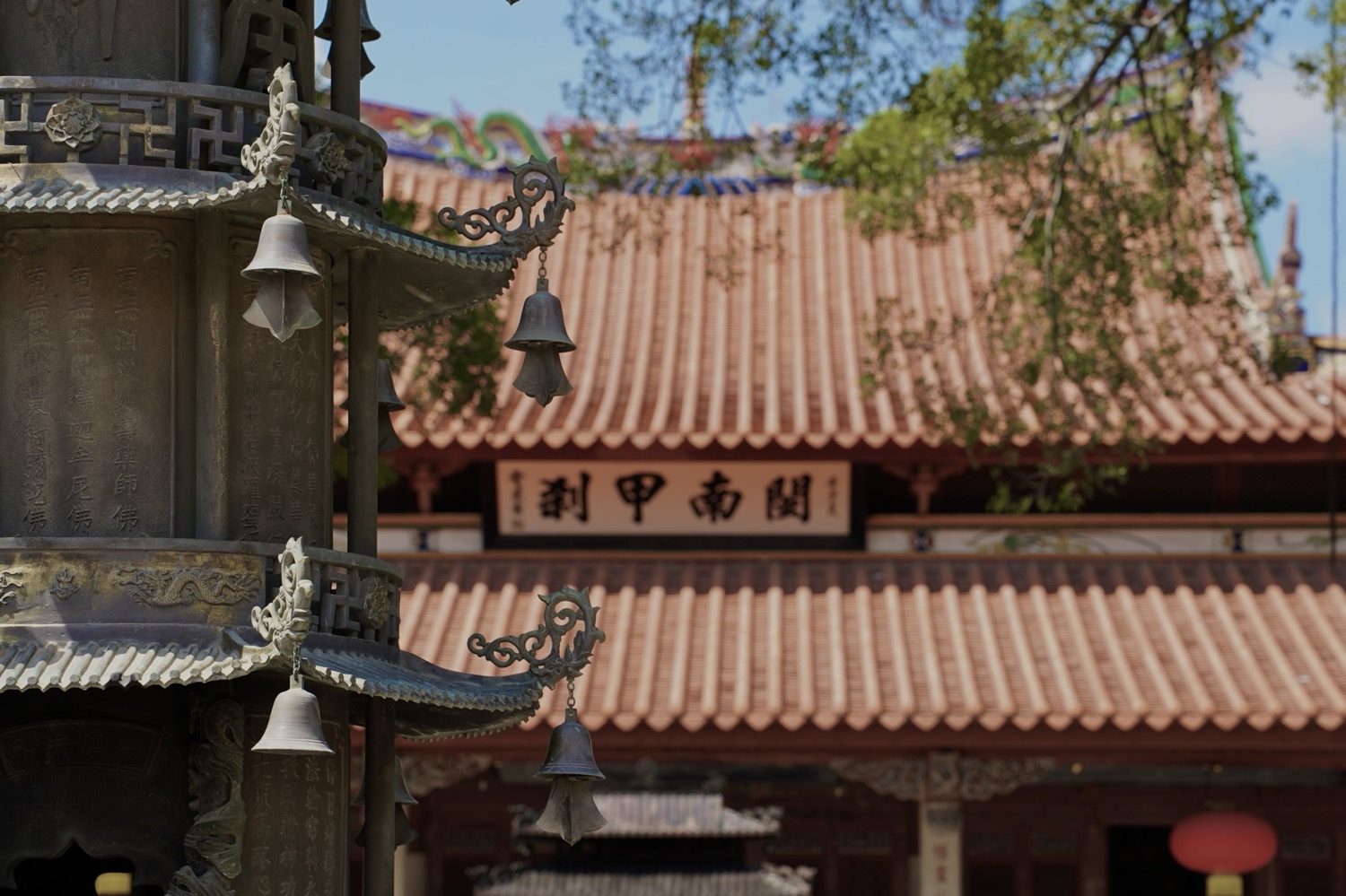
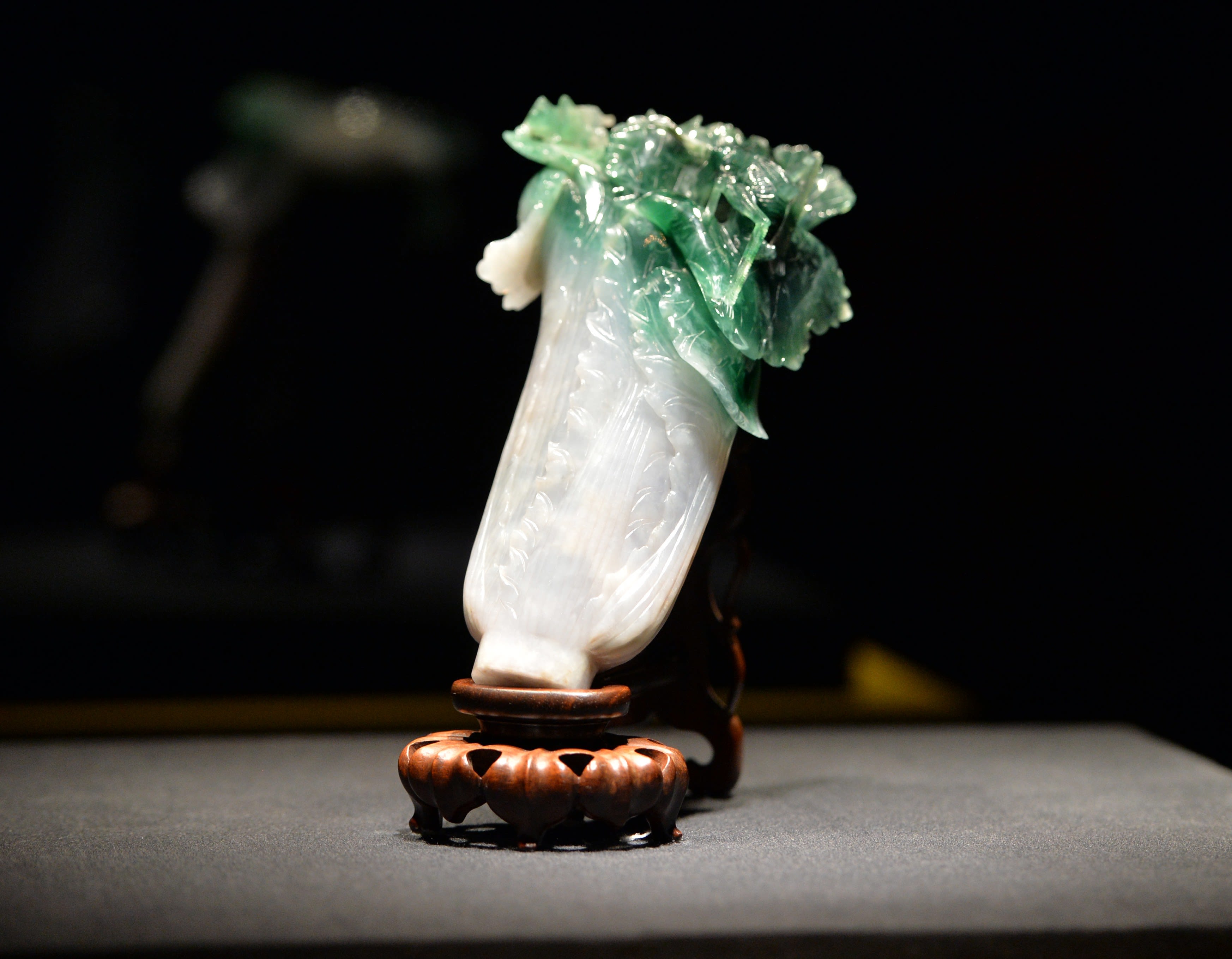
Carved from a single piece of jadeite, this masterpiece utilizes the natural colors of the stone to represent a cabbage with a locust and katydid, symbolizing purity and fertility.
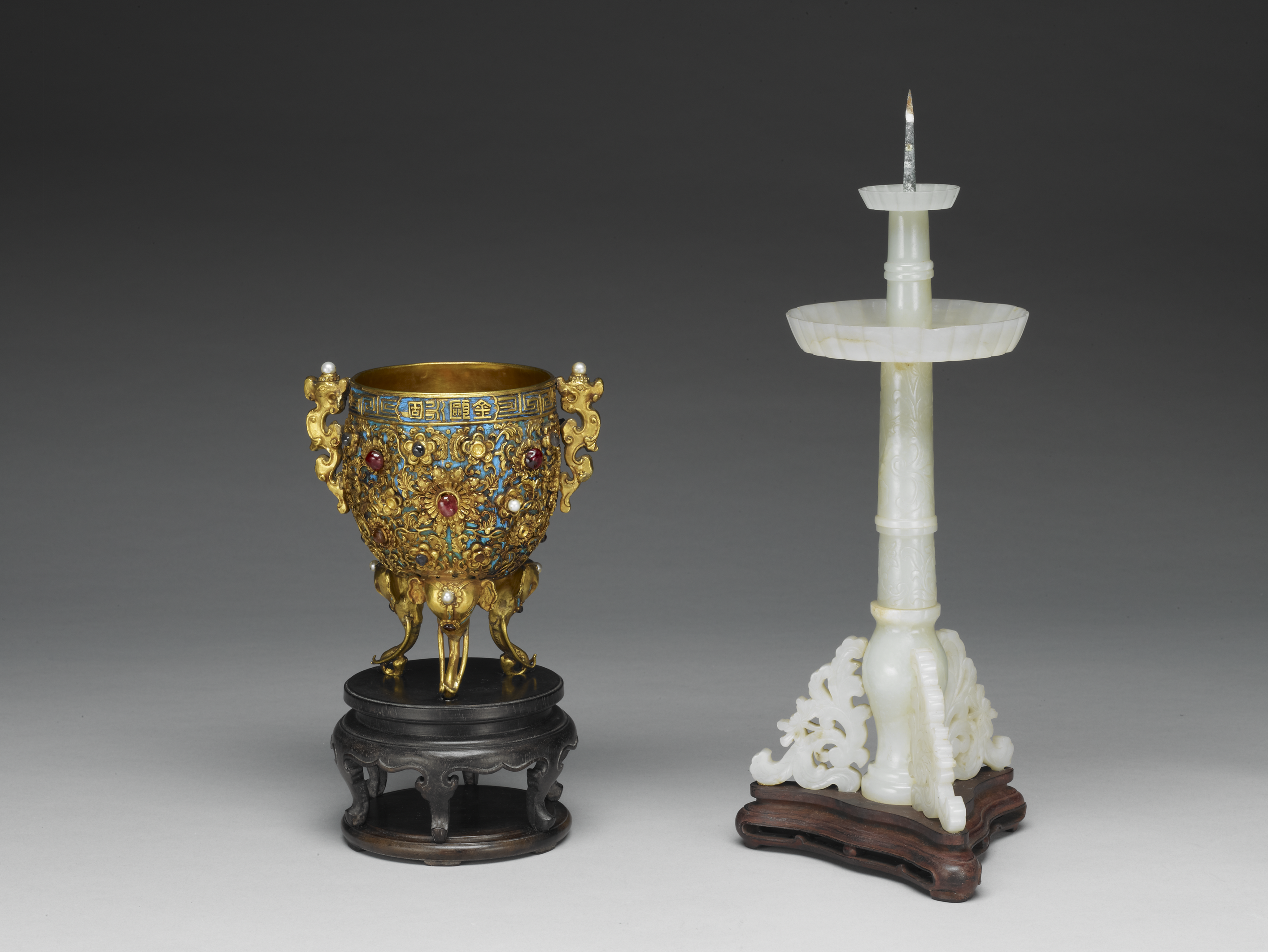
Exquisitely inlaid with pearls, rubies, and sapphires, this chalice was used by the Qianlong Emperor during the ceremonial writing of the first character of the New Year.
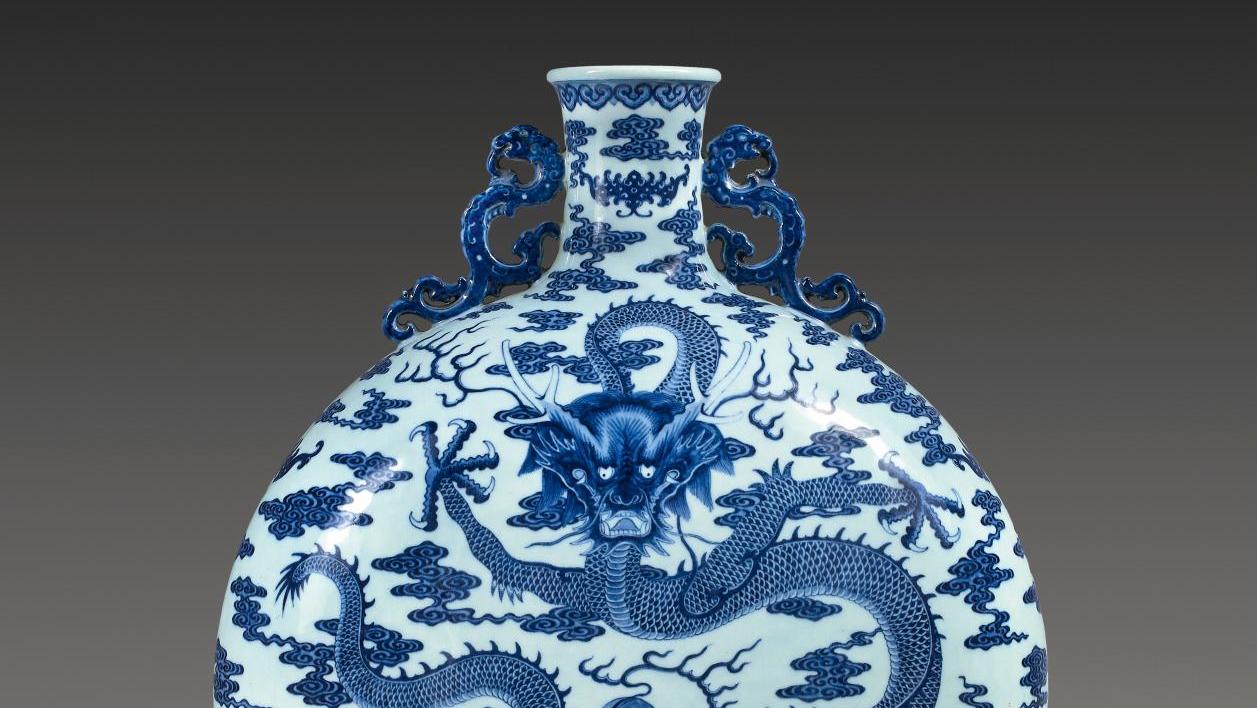
A magnificent piece from the Yongle reign, featuring vibrant cobalt blue glaze and majestic dragon motifs, representing the peak of Ming dynasty porcelain artistry.
紫禁城位于北京市中心,是中国最大和最著名的宫殿建筑群。它建于15世纪初期(明朝时代),曾是明、清两代皇帝的主要住所,历时五百多年。如今已成为故宫博物院,收藏着大量帝王艺术作品、服饰、瓷器、青铜器历史文献。
The most intricate wooden structure atop the palace walls.紫禁城城墙上最精巧的木结构建筑。
The highest rank of palace architecture.紫禁城内等级最高的宫殿。
Yellow glazed tiles reserved for imperial use.黃色琉璃瓦为皇家专属。
A tranquil garden at the northern tip of the palace.紫禁城最北端的幽静宫苑。
The grand southern entrance.紫禁城南端的庄严入口。
Ming & Qing emperors' residence.明清帝王正寝。
The working residence of Qing emperors.清代帝王处理政务。
The northern exit facing Jingshan.紫禁城北门。
由一块半白半绿的翠玉雕刻而成,巧妙利用玉石天然色彩,菜叶上还雕有螽斯和蝗虫,寓意纯洁与多子多孙。
杯身镶嵌珍珠、红宝石与蓝宝石,做工精美,是乾隆皇帝在每年元旦举行开笔仪式时专用的酒杯,寓意江山永固。
永乐时期的青花瓷杰作,采用进口苏麻离青料烧制,呈现出深邃的钴蓝色,壶身绘有生动威武的苍龙图案。
An official overview of all halls, courtyards, and gates open to visitors — from the Meridian Gate in the south to the Gate of Divine Prowess in the north. 官方全园导览图——从南午门到北神武门,涵盖中路、东路、西路所有对游客开放的宫殿、庭院与门楼。
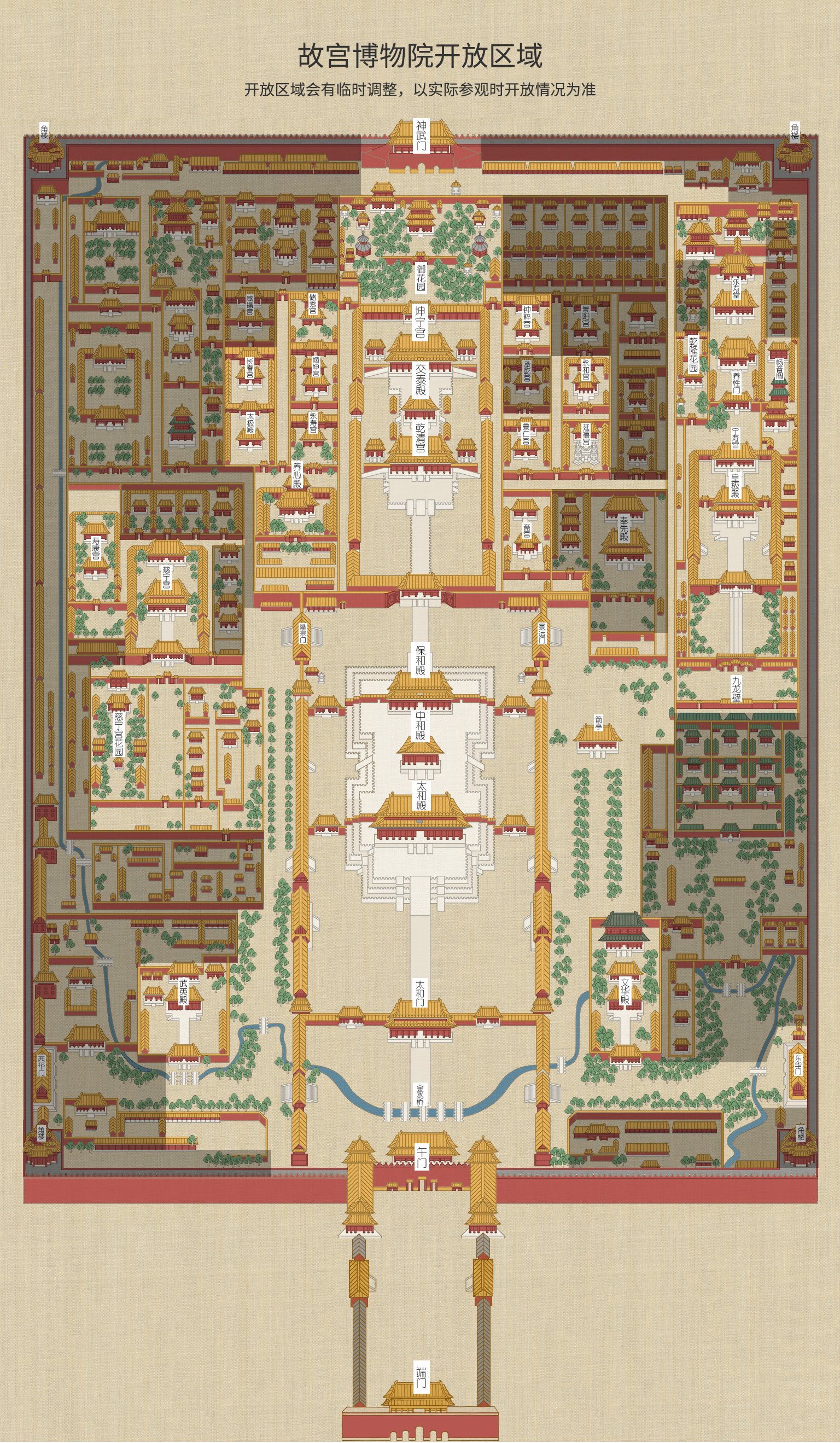
Click the map to enlarge. Official Palace Museum open-area map, last revised 2025. 点击图片可放大查看。故宫博物院官方开放区域导览图,2025 最新版本。
Six centuries of imperial grandeur, four ceremonial gates. Plan your journey through the heart of Ming & Qing China. 六百年皇朝气象,四向帝阙门户。踏上通往明清中轴的旅程。
The southern main entrance and the ceremonial heart of the palace. Five phoenix-tail arches, flanked by imposing corner towers, once witnessed imperial edicts and grand receptions. 紫禁城南端的正门,皇朝礼仪的核心。五道御路、两侧耸立的阙楼,曾见证圣旨颁诏与凯旋盛典。
The northern gate, set against the green silhouette of Jingshan Hill. Reserved as the exit only — visitors depart here after completing the central axis. 紫禁城北门,与景山依傍。作为出口专用,游客沿中轴线游览结束后由此离开。
Eastern side entrance — the gateway to the Treasure Gallery and the Clock Exhibition Hall. Originally reserved for court officials to enter daily. 东侧门,是珍宝馆与钟表馆的专属入口。原为臣工每日入朝之门。
Western counterpart to Donghua. Once used by the imperial family to attend banquets at the Mountain of Accumulated Virtue. Today it stands quietly, opened by appointment for special tours. 与东华门东西对称。昔为皇室赴北海御宴之路,今日常年幽静,偶有特别导览开放。
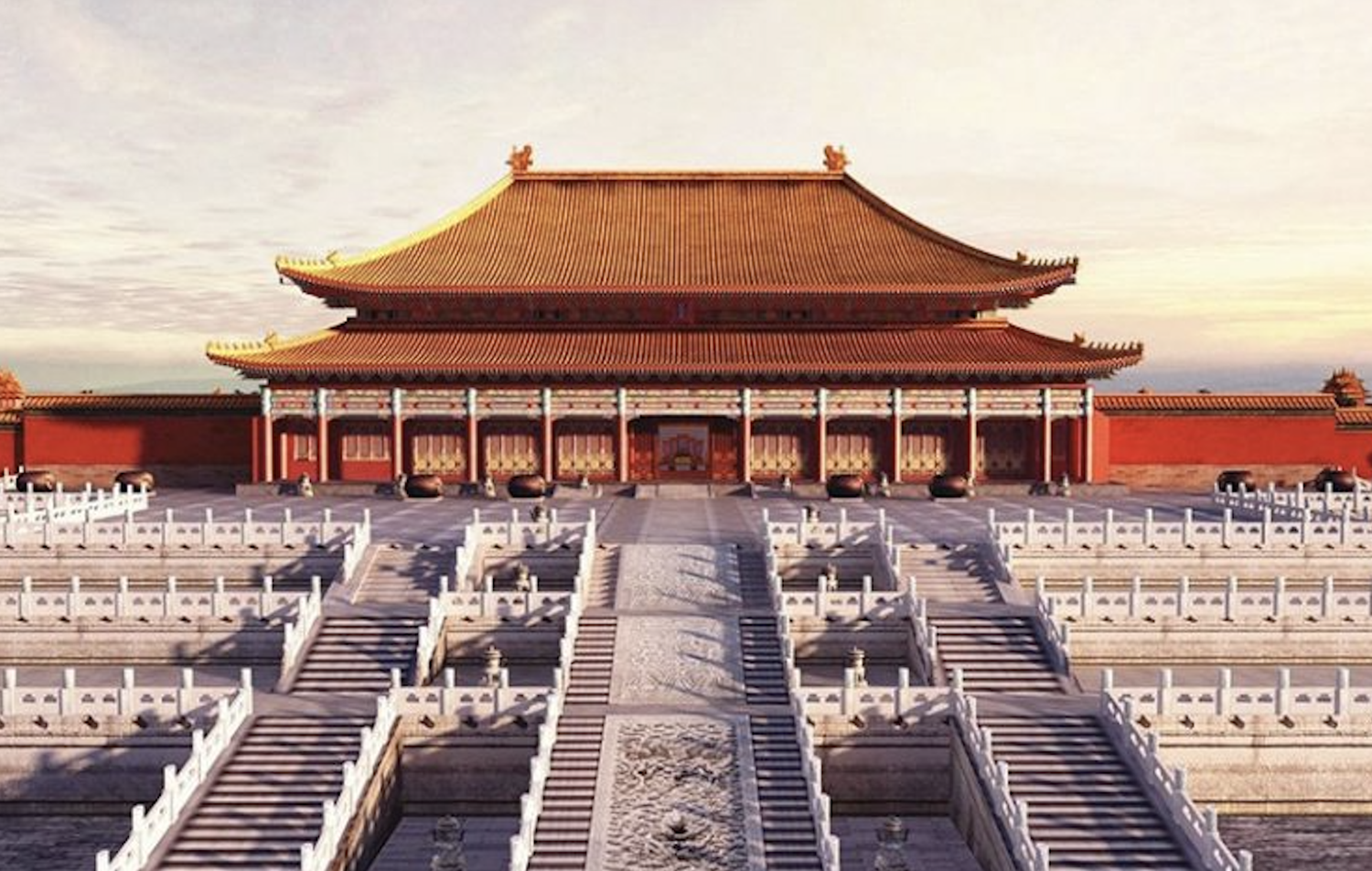
A 600-year journey through the heart of imperial China — from the Meridian Gate to the Imperial Garden. 穿越明清两代 600 年历史,从午门到御花园,漫步紫禁城中轴线。
Enter 360° Panorama → 进入 360° 全景 →As a UNESCO World Heritage Site, the Forbidden City attracts millions of visitors each year — yet space, time, and conservation constraints make it impossible for any single visitor to absorb its full historical depth. Traditional immersive tours rarely go beyond visual display, with limited multi-modal context and fragmented data management. 作为世界文化遗产地,故宫博物院每年接待上千万观众。然而受空间承载力、开放时间、保护要求等限制,实地游览难以全面领略其全貌。传统沉浸式漫游多停留在视觉展示层面,存在全景数据价值挖掘不足、多模态数据展示单一、大空间漫游开发困难、数据管理混乱等问题。
Since 2015, the Palace Museum has accumulated a vast library of panoramic imagery and multi-modal data. In 2023, with funding from the Ministry of Culture and Tourism's National Key R&D Program, we launched the project "Multi-modal Data Value Mining Based on Panoramic Imagery for Immersive Cultural Heritage Tourism". After three years of fieldwork, data integration, and technical development, the Forbidden City Central Axis was selected as the pilot area — covering four core regions: Outer Southern Gate, Outer Court, Inner Court, and the Imperial Garden. 故宫博物院自 2015 年起积累海量全景影像与多模态数据。2023 年,在文化和旅游部国家文化和旅游科技创新研发重点项目资金资助下,正式启动《文化遗产型旅游目的地沉浸式漫游中基于全景影像的多模态数据价值挖掘研究》项目。历经三年规划与实践,项目以故宫中轴线区域为核心示范样本,突破传统全景展示局限,深度挖掘全景影像数据价值,构建起可复制、可推广的文化遗产数字化保护与沉浸式游览新模式。
The grand southern entrance. The Emperor's proclamations were issued here, and the U-shaped structure once held the morning court.紫禁城正南门,明清两代皇帝颁布诏书之处。平面呈"凹"字形,曾设朝审、廷杖等重大典礼。
Guarded by bronze lions, this gate marks the entrance to the Outer Court — the political heart of imperial China.门前蹲坐两对铜狮子,标志外朝的起点,是明清皇帝举行"御门听政"之处。
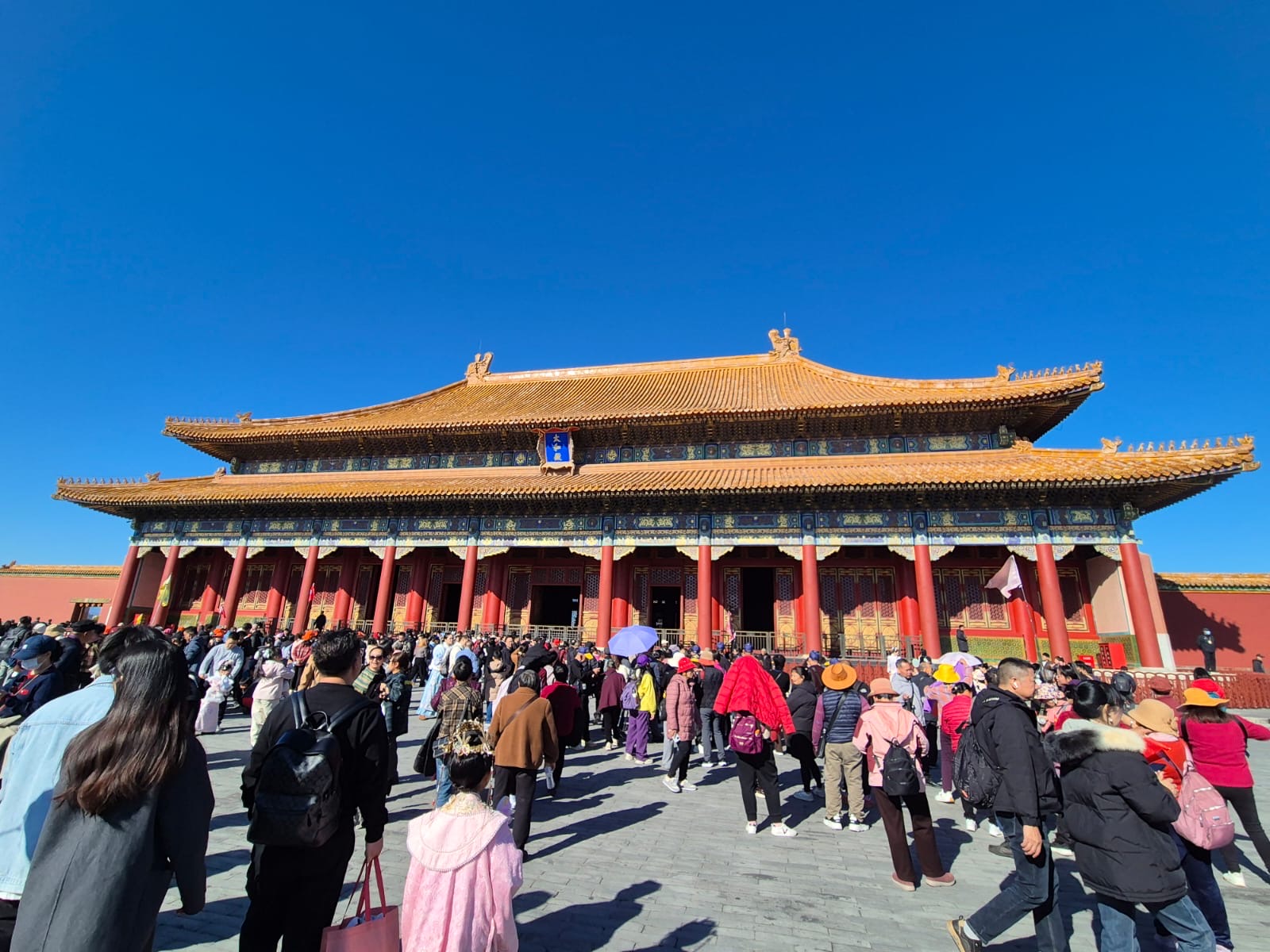
The largest wooden structure in the complex. Used for enthronement ceremonies, imperial weddings, and the announcement of military victories.俗称"金銮殿",紫禁城内体量最大的木结构建筑。用于皇帝登基、大婚、册立皇后、命将出征等大典。
Host of imperial banquets and the highest-level imperial examinations (palace exams) of the Qing dynasty.乾隆以后成为科举殿试场所,清代公主下嫁亦在此举行。殿后"云龙大石雕"重 200 余吨,为紫禁城最大石雕。
The threshold between state business (Outer Court) and family life (Inner Court).分隔外朝与内廷的标志性建筑。门内"御门听政"延续至雍正朝,军机处亦设于此门外。
Primary residence of Ming and early Qing emperors. The plaque bears four imperial scripts, each written by a different emperor.明及清初皇帝的寝宫。"正大光明"匾额由顺治、康熙、雍正、乾隆四位皇帝先后题写,决定了清朝皇位继承。
A classical Ming-and-Qing garden behind the Inner Court — pavilions, ancient cypresses, and rockeries arranged along the central axis.建于明代,以中轴对称布局,亭台楼阁与古树奇石交织。园内"连理柏"被誉为"帝王树",见证朝代兴替。
Begin at the southern gate, ascend the ramparts, and gaze north over the entire palace.从南门开始,登上城墙向北俯瞰整座宫殿。
Walk through the three great halls — Supreme, Central, and Preserved Harmony.走过太和、中和、保和三座大殿。
Discover the residence of emperors and empresses — three palaces of private life.探访帝后起居之所——乾清、交泰、坤宁三宫。
End at the classical garden — pavilions, pines, and the north gate (Gate of Divine Prowess).在古典园林中结束行程——亭台、古松与神武门。
A unified multi-modal knowledge graph links panoramic imagery with 3D models, audio narration, historical archives, and VR reconstructions. 统一的多模态知识图谱将全景影像与 3D 模型、音频讲解、历史档案、VR 重建相连接。
The Palace Museum begins systematic panoramic image capture across the complex.故宫博物院启动全宫区系统性全景影像采集。
Funded by the Ministry of Culture and Tourism's National Key R&D Program, the immersive-tourism research project begins.获文化和旅游部国家文化和旅游科技创新研发重点项目资助,项目正式启动。
Teams conduct on-site panoramic capture in the four core regions and integrate multi-modal sources.团队在四个核心区域进行实地全景采集,并整合多模态数据。
Hierarchical panorama data management, hot-region mapping, and viewer engine developed.研发分级分区的全景数据管理体系、热点区域映射和漫游引擎。
The immersive Imperial Axis Panorama Tour launches to the public — fully reproducible across other heritage sites.中轴线全景漫游面向公众开放,成果可复制、可推广到其他文化遗产地。
Click any building on the 3D Map to open the official Palace Museum 360° panorama — no registration, no plugin, just your browser. 在 3D 地图中点击任意建筑,即可打开故宫博物院官方 360° 全景——无需注册、无需插件,仅需浏览器。
← Back to 3D Map ← 返回 3D 地图